The Deadly Bluff: Why the \'Game of Chicken\' on Railway Tracks is a Risk Brazil Can\'t Afford
The Deadly Bluff: Why the \'Game of Chicken\' on Railway Tracks is a Risk Brazil Can\'t Afford
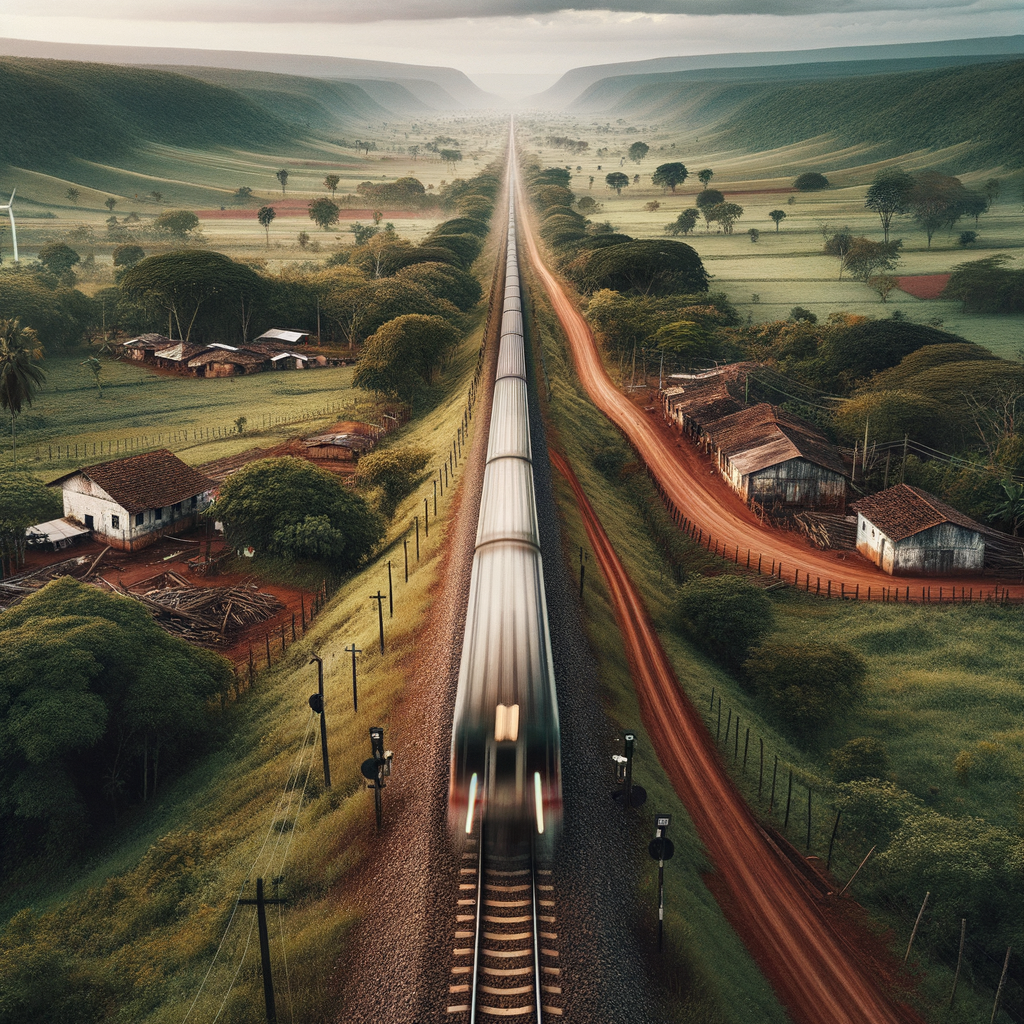
As someone deeply concerned with public safety, I\'ve spent a lot of time thinking about the invisible dangers that lurk in plain sight. One such danger, particularly prevalent and tragically fatal in Brazil, is what many refer to as the \'game of chicken\' played out on our railway tracks. It’s a terrifying scenario where individuals, often young, place themselves in the path of an oncoming train, daring fate – and the train operator – to see who will yield first. The problem, of course, is that a train cannot simply swerve or stop on a dime. The consequences are almost always catastrophic, and it’s a risk I firmly believe Brazil simply cannot afford to continue taking.
Understanding the \'Game of Chicken\' on Brazil\'s Tracks
The \'Game of Chicken\' is a well-known concept, originating from a psychological experiment and often depicted in popular culture. It describes a situation where two drivers head towards each other on a collision course, and the first to swerve is considered the \'chicken\' or the coward. When translated to railway tracks, this dangerous psychological dynamic, sometimes referred to by its Italian name,
il gioco del pollo, isn\'t just a metaphor; it\'s a literal, life-or-death confrontation. Imagine the sheer audacity, the reckless abandon, of standing on a railway track as a massive locomotive hurtles towards you. The behaviors involved can range from casually walking on tracks, ignoring warning signals, to outright daring a train operator by delaying stepping off the tracks until the very last second. From my perspective, it’s a terrifying display of bravado mixed with a profound misunderstanding of physics and human limitations. These acts are often fueled by a misguided sense of invincibility or a desperate attempt to impress peers, but the truth is, the only outcome for the \'player\' is a devastating encounter with an immovable force.
The Grim Reality: Statistics and Human Cost in Brazil
The grim reality of this \'game\' in Brazil is stark and heartbreaking. While exact, national statistics for intentional \'game of chicken\' incidents are hard to pinpoint, they are often folded into broader categories of railway trespass and pedestrian accidents. However, the sheer number of fatalities and severe injuries on Brazilian railway lines paints a clear picture of an alarming problem. Reports from railway operators across states like São Paulo, Minas Gerais, and Rio Grande do Sul frequently highlight hundreds of incidents annually involving individuals on tracks. These aren\'t just numbers; they represent brothers, sisters, parents, and children whose lives are irrevocably altered or tragically cut short. I’ve read countless reports of communities torn apart by the loss of young lives, of families grappling with unimaginable grief. The impact extends beyond the immediate victim, leaving a ripple effect of trauma, particularly in areas where tracks run through urban or semi-urban environments, making accidental or intentional trespassing all too common.
Unpacking the Root Causes: Why Brazilians Play with Fire
So, why does this deadly game persist? From what I\'ve observed and researched, the reasons are multifaceted, deeply rooted in Brazil’s social, economic, and cultural fabric. Socio-economic factors play a significant role; in many poorer communities, railway tracks often serve as an informal shortcut, a \'path of least resistance\' to school, work, or market, due to a lack of safe pedestrian infrastructure like bridges or underpasses. This necessity can quickly morph into recklessness. Then there are the behavioral aspects: a yearning for thrill-seeking, particularly among adolescents, peer pressure to prove bravery, or a profound lack of awareness about the true danger and the train\'s inability to stop. Some simply underestimate the speed and force of a train, while others may be under the influence of alcohol or drugs, impairing their judgment. Compounding these factors are infrastructure challenges. In many regions, railway lines are not adequately fenced, easily accessible, or lack clear warning signs, inadvertently inviting trespass. It\'s a complex web of reasons, but none of them, in my opinion, justify the profound risk being taken.
Beyond the Bluff: Far-Reaching Consequences for Individuals and Society
The consequences of this dangerous trend extend far beyond the immediate fatality or injury. For the individuals involved, the outcome is often death or life-altering injuries such as amputations, severe head trauma, and permanent disabilities. But we must also consider the profound psychological trauma experienced by train operators, who often witness these horrific incidents unfold helplessly. Imagine the mental burden of knowing you\'ve been involved in a fatal accident, despite having no control over the situation. Emergency responders and witnesses, too, are left to grapple with the disturbing images and the emotional aftermath. Furthermore, these incidents cause significant operational disruptions for railway companies, leading to delays in passenger and freight services, economic losses due to halted operations, and extensive investigations. There are also substantial legal ramifications, public relations challenges, and a drain on public resources for accident response and rehabilitation services. This isn\'t just an individual problem; it\'s a societal burden that Brazil cannot afford.
Building Safer Tracks: Strategies and Solutions for Brazil
Recognizing the severity of this issue, I believe we must pivot towards actionable solutions and preventative measures. We need a multi-pronged approach that addresses both human behavior and infrastructural shortcomings.
Education and Awareness Initiatives
One of the most crucial steps is to empower communities with knowledge. I advocate for comprehensive public safety campaigns that specifically target the dangers of railway trespass. This means engaging schools with educational programs, reaching out to local communities through workshops and outreach events, and utilizing social media and public service announcements to highlight the irreversible dangers of playing on or near tracks. We need to dismantle the myth that trains can stop quickly and instill a healthy respect for railway environments.
Infrastructure and Technological Upgrades
While education is vital, it must be coupled with tangible improvements to our physical infrastructure. This includes installing robust fencing along high-risk sections of railway lines, enhancing and increasing clear, multilingual signage warning of danger, and critically, building safer pedestrian crossings, overpasses, and underpasses in areas where communities frequently cross tracks. We should also explore modern technological solutions, such as surveillance systems to detect trespassers, automated warning systems at unmarked crossings, and even drone patrols in particularly problematic areas to deter dangerous behavior.
The Unacceptable Risk: Why Brazil Can\'t Afford This Deadly Game
Ultimately, the message is clear: the \'Game of Chicken\' on railway tracks is an unacceptable risk, and its human and economic costs are simply unsustainable for Brazil. We are losing valuable lives, inflicting deep psychological wounds, and incurring significant financial burdens. As I see it, this isn\'t merely a railway problem; it\'s a societal challenge that demands collective action. Government bodies, railway operators, local communities, schools, and indeed, every individual, must collaborate to foster a culture of safety and respect for our railway infrastructure. It’s time to move beyond the deadly bluff and work together to create a safer railway environment for all, ending this perilous practice once and for all.